

Peak Season Guarantee Suspension: Late Delivery Refund Windows
Between October and December, parcel carriers face volume surges that can overwhelm sortation networks and delivery routes. To protect themselves from refund liability during this crunch, FedEx, UPS, and USPS suspend money-back guarantees on select service tiers—sometimes for weeks at a time. Understanding late delivery refund windows during peak season is essential for shipping operations managing costs during the year's busiest weeks. The mechanics are blunt: a suspended guarantee means zero refund eligibility, no matter how late the package arrives or how badly it misses the commit time printed on the label.
The catch is that suspension dates and coverage vary by carrier and service level. One carrier may lift guarantees on ground services while keeping overnight protections intact. Another may black out refunds for residential deliveries but honor commercial commitments. Most carriers publish suspension windows somewhere in their terms, but the dates shift year to year and tier to tier, making it difficult to plan which shipments will remain refund-eligible when delays hit.
For shipping centers managing tight margins, this opacity translates directly into cost-recovery risk. Without knowing which refundable guarantees remain available during holiday shipping peak. You cannot forecast how much money will be unrecoverable when holiday rush delays inevitably occur.
Some guarantees do remain refundable throughout peak season, and identifying those open windows is the first step in salvaging delayed-shipment costs when every other avenue has closed.
Carrier Refund Windows: Active vs. Suspended
Each major carrier publishes its own blackout calendar, and the dates rarely align. FedEx typically suspends money-back guarantees on Express Saver, 2Day, and Standard Overnight from mid-November through late December, though FedEx Priority Overnight and First Overnight often remain refundable through most of the peak window. UPS follows a similar pattern: Ground and 3 Day Select guarantees go dark in early November, while Next Day Air services stay eligible for refunds until the final week before Christmas. USPS Priority Mail Express—the only guaranteed USPS product—holds its commitment through the entire season, making it one of the few services that never suspends.
Premium tiers suspend earlier than you might expect. FedEx 2Day and UPS 2nd Day Air guarantees often end in mid-October, well before the Thanksgiving rush. The reasoning is volume: carriers know their networks will saturate, and they preemptively pull guarantees on mid-tier services to avoid liability. Ground services follow next, with FedEx Ground and UPS Ground suspensions beginning in early November and running through the first week of January. By contrast, the fastest overnight products—FedEx Priority Overnight, UPS Next Day Air Early, and UPS Next Day Air—maintain guarantees longer because carriers allocate capacity to protect their highest-margin offerings.
Active vs. Suspended Guarantees
FedEx Express Saver and 2Day are typically suspended from November 15 through December 29. FedEx Priority Overnight remains active until December 22, and FedEx First Overnight holds through December 23. UPS Ground suspends from November 1 through January 5, while UPS 3 Day Select goes dark November 4 through December 27. UPS Next Day Air stays refundable until December 20, and UPS Next Day Air Early holds until December 22. USPS Priority Mail Express never suspends, offering refund eligibility on every shipment that misses the guaranteed delivery window.
Timing Your Claims
Even when delivery guarantee refund eligibility remains active for peak shipping, the clock to file is short. FedEx requires refund requests within fifteen calendar days of delivery for late shipments. UPS allows fifteen days from the invoice date, not the delivery date. USPS Priority Mail Express refunds must be claimed within thirty days. If a package delivers late on December 20 and the carrier invoices on December 27, you have until January 11 to file with UPS—but the holiday closure window compresses your working timeline. Filing early, before invoices pile up in the new year, keeps refund claims from expiring uncollected.

FedEx Refund Eligibility During Blackout
FedEx Ground and FedEx Home Delivery guarantees suspend around mid-November and remain closed through December 24, meaning no refund eligibility for late arrivals during the highest-volume weeks of the year. FedEx Express follows a similar suspension window, closing guarantees in mid-November and reopening after Christmas.
FedEx Overnight services—Priority Overnight, Standard Overnight, and First Overnight—typically do not suspend guarantees during peak season. If your shipment requires refund protection during blackout, routing to an Overnight tier preserves eligibility for late-delivery refunds, though you will pay the Overnight premium.
FedEx International services operate on a separate blackout schedule, with guarantee suspensions that vary by destination zone and often extend into early January. If you need refund coverage during December, Overnight tiers offer the only reliable escape route within the FedEx portfolio.
UPS and USPS Peak Blackouts
UPS typically suspends on-time guarantees mid-October, with the blackout extending through early January across most service tiers. Ground and 3-Day Select lose refund eligibility first, often by mid-October, while UPS 2-Day Air follows a few weeks later. This staggered schedule means merchants who select slower services lose refund protection earlier than those paying premiums for mid-tier air. USPS suspends Priority Mail Express guarantees in mid-November, but Priority Mail (non-Express) often maintains its refund window longer.
The trade-off is clear: slower services stay refundable longer during peak, but their baseline delivery times already build in extra days.Knowing which carrier refunds stay open during peak season lets you route shipments through services that still honor guarantees, balancing speed against the cost of lost refund eligibility when delays hit.
Refund Claim Deadlines and Documentation
Understanding when guarantees suspend is only half the equation. The second, often-overlooked deadline is the claim submission window—the period during which you're allowed to file a refund request for a past service failure. Guarantee suspension tells you when new shipments lose coverage; claim deadlines tell you when you lose the ability to recover money on shipments that already failed.
Carriers typically require claims to be filed within 15 to 30 days of the delivery failure. Depending on the service tier and carrier. That means a package shipped in early December and delayed past its guarantee may hit the claim-filing deadline in early or mid-January—before you've finished reconciling holiday invoices. If you miss the deadline, the carrier owes you nothing, even if the delay was clear-cut.
To file a successful claim, you need the following four elements:
- tracking records showing the shipment process
- service confirmation documenting the guarantee tier purchased
- delivery timestamp proof from the carrier's scan data
- invoice reference linking the charge to your account
Missing any one of these can sink a valid claim.
Peak-season volume makes deadline compliance harder. When you're shipping hundreds or thousands of packages in October and November, tracking every delivery against its guarantee and filing claims within the narrow window becomes manual labor at scale—exactly the reconciliation task that slips through when staff is focused on fulfillment. Submit claims early, ideally within days of the delay, to stay ahead of deadlines and preserve every dollar of refund eligibility.
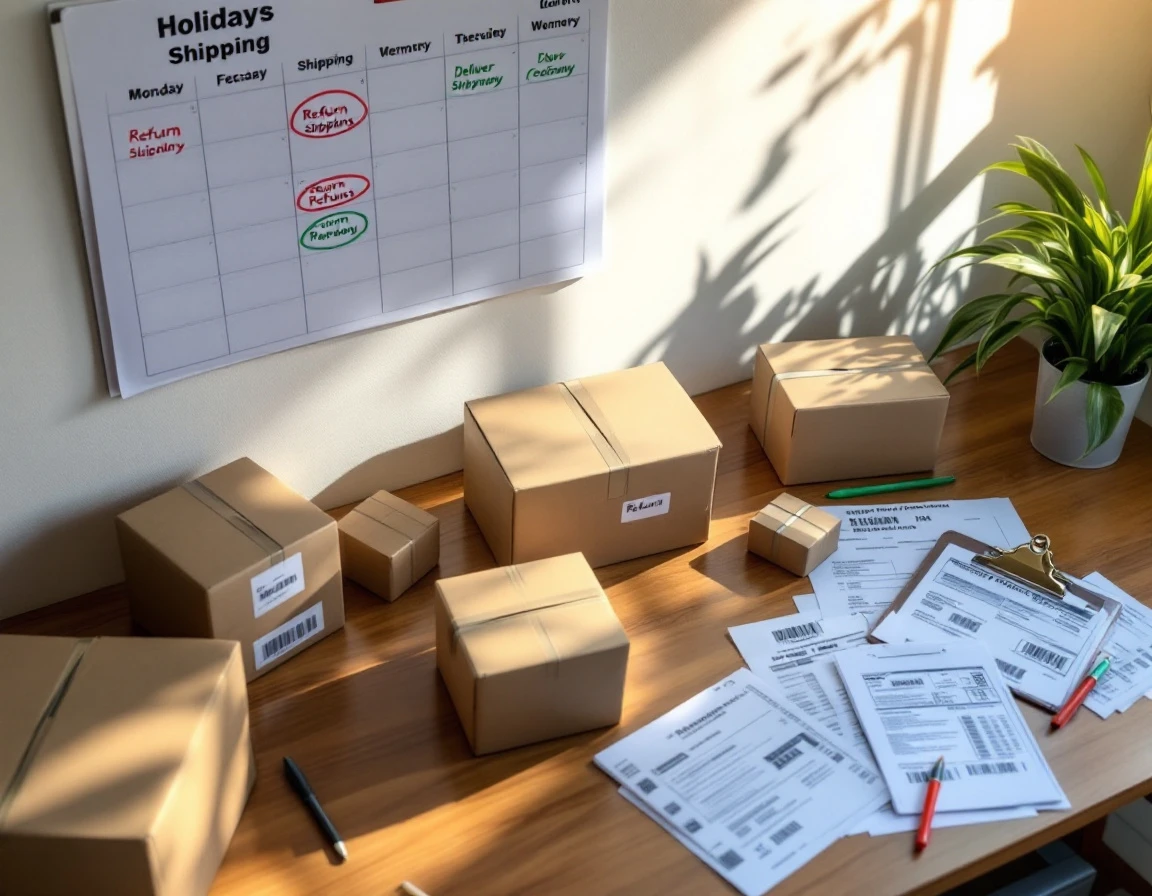
Strategic Shipping Choices for October–December: Peak Season Refund Policy Guide
Understanding which refund windows close when lets you choose the right carrier service for each shipment. Premium overnight and 2-day services suspend guarantees earlier than ground—often by mid-October—which means you pay the highest rates and lose refund protection first. Ground services maintain their refund windows deeper into November, but carry the inherent risk of longer transit times during the busiest shipping weeks of the year.
The smart play is a hybrid approach. Ship time-sensitive orders—anything that must arrive by a hard deadline—early in October, before mid-month when premium guarantees start suspending. Use overnight or 2-day service for those shipments while the refund window is still open, so if the carrier misses the commitment you can still recover the premium. For orders that can tolerate delay or arrive post-peak, defer the shipment or route it through ground service, which keeps refund eligibility longer even if transit is slower.
International and specialized services follow separate refund calendars from domestic parcel, so audit each service tier independently. The goal is to match shipment urgency to the window of refund protection. Place orders that need both speed and holiday rush delivery guarantee refunds before guarantees suspend, and save lower-cost ground for shipments where refund protection matters more than arrival speed.
Next Steps: Prepare Before Blackouts Begin
Start by auditing your current shipping volume and baseline delay rate before October 1. Pull three months of carrier invoices and count the average number of late deliveries per week when guarantees are fully active. This baseline tells you how many refundable delays you should expect during peak season — and how much money you stand to lose when guarantees suspend.
Next, map your shipment calendar against the carrier blackout dates mentioned above. Identify your highest-volume shipping weeks and mark which service tiers will retain refund eligibility during those windows. Pre-plan your routing decisions now, before the holiday rush forces reactive choices that leave money on the table.
Set refund claim submission reminders for early January. Most carriers close their claim windows 15 to 30 days after delivery, meaning December shipments must be filed by mid-January or the refund disappears. Manual reconciliation of thousands of shipments against delivery scans and guarantee commitments is the kind of detail work that automation handles best. PatrolPuffin's refund automation captures eligible claims before deadlines close, so no recoverable delay slips past the filing window.